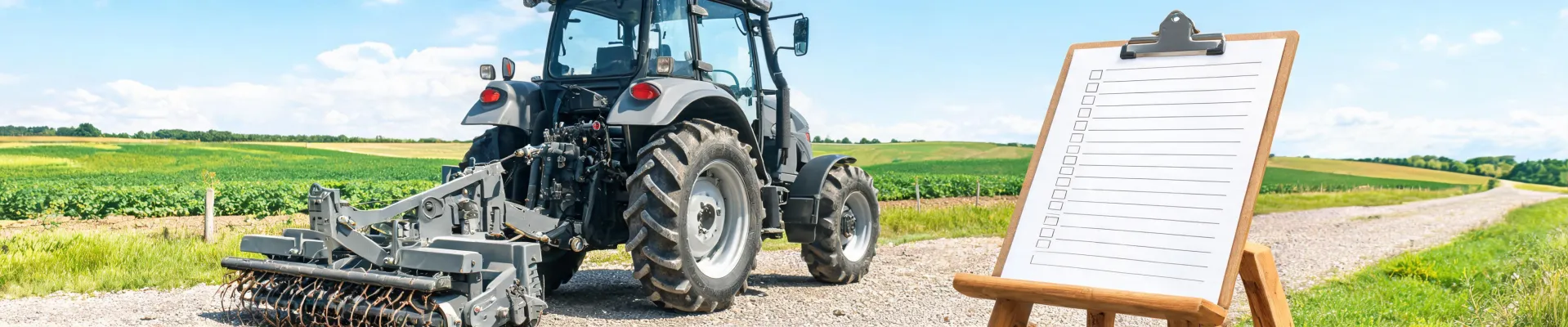
Suppose you're standing at the barn door with a clipboard, listing every job you'd hand to a tractor this season — mowing headlands, moving compost, dragging a harrow over the market garden, scraping the driveway after a storm. Half of it needs a loader and happens in a short window. The rest comes in short bites across the summer. The real question on that clipboard isn't which model. It's whether this farm should own a compact utility tractor at all.
Get that order wrong and you'll spend years paying for a machine sized to a farm you don't have. For most low-hour US farms, the answer is to rent or custom-hire the heaviest jobs and reserve buying for chores that a compact tractor's small size and loader make possible. Decide by annual hours and physical fit, not horsepower.
Start With Annual Hours, Not Horsepower
The usual first move is opening a dealer's build-and-price page and sorting by horsepower. It feels like progress because the numbers are right there. What it really does is lock you into comparing machines before you know the workload, and the one you fall for is almost always a size up from what the job needs.
Build the one-page log first. Four columns: task, seasonal window, hours per task, implement required. Loader work and mowing dominate most small-farm lists, and both get overestimated because people count the days they'd like to be out there rather than the hours the job takes. Walk the fields and fence lines while you fill it in. The total at the bottom is the number everything else hangs on.
Then rank your criteria before you look at a single machine. Annual hours decide whether ownership costs can spread thin enough to make sense. Physical fit decides whether the tractor can do the job at all. Dealer and service access decides how long you sit idle when something breaks in the busy season. Price comes last, because a cheap machine that fails the first three screens is the most expensive thing on the lot.
The Small Tractor Cost Surprise
Most people assume a smaller tractor is the cheaper way in. In fact, smaller tractors — the ones usually called compact tractors — can look more expensive when you value them on a per-horsepower basis. You're paying for a tight package built to fit where big iron can't go, and the price doesn't scale down the way buyers expect.
The sticker is only the first number. Ownership costs for machinery include depreciation, interest on the investment, taxes, insurance and housing. Those arrive every year whether the machine works all season or sits under tarps all winter. It still depreciates, still ties up capital, still needs a shed, still shows up on the insurance bill.
So test total annual ownership cost against the hours your log produced. Divide the yearly total by your real hours and the answer is often uncomfortable. That arithmetic isn't an argument against buying. It tells you how much work the machine has to do before owning it is rational.
Renting Is Not a Last Resort
A lot of folks treat renting as the emergency option. Most people assume it's what you do when the old machine quits mid-haying and the dealership has nothing left on the lot. That framing drops rental to the bottom of the list, after you've already committed to owning. Actually, renting or custom hiring belongs in the first comparison, especially for the jobs that show up a few times a year.
Extension guidance on farm machinery puts it plainly: renting or custom hiring implements and machines is often a better choice than trying to keep old equipment in operating condition. Repairing a tired machine to get through one more season burns labor and parts, and you still end up with an unreliable tractor.
Read that carefully, though. It says renting often beats propping up old equipment. It doesn't say renting beats a new purchase on every farm. The case is strongest when annual hours are low, the heavy jobs land in short windows, and there's nowhere dry to park a machine. Get quotes for those peak jobs before you sign anything: delivery cost, minimum billing period, whether an operator comes with it, who carries the insurance if something breaks.
Measure Gates Before You Compare Models
Comparing price before fit is the expensive mistake. A compact tractor that can't pass your narrowest gate, turn in the barnyard or fit under the shed door is worth nothing on your farm at any price. Buyers do it backwards constantly: narrow the field by price, then find out at delivery that the machine is a little too wide for the orchard rows.
Make it a pass/fail list instead of a preference. Measure the narrowest gate, the clear height and width of every door the tractor has to use, the turning room in the yard, the deck and ramp capacity of your trailer, and the space where it lives when it isn't working. Then add rear implement width — a mower or tiller hanging off the back is what actually clips fence posts and bed edges.
Take those numbers to the dealer and ask for the machine's width and turning figures. Anything that fails a gate or a door is out, and you've ruled it out before you fell for the loader. If nothing on the lot passes, that's your answer for the year: rent or hire the work out and revisit when the layout changes.
Put Four Options on Your Shortlist
Dealer inventory is a bad place to start a shortlist, because it quietly deletes three of your four options. Write the list yourself: buy new, buy used, rent for peak jobs, and custom hire or a contractor. Match each one against the same task log, the same annual hours, the same storage and transport limits, the same dealer support.
Buying new buys known history and a service relationship, and you pay for both. Buying used trades that certainty for a lower entry cost, a maintenance record you have to reconstruct yourself, and a parts hunt when something obscure fails. Renting is priced by the job and keeps the machine off your property, costing you scheduling flexibility instead of capital. Custom hire puts someone else's equipment and operator on the job, with the least control over timing and the least exposure to breakdowns.
Run all four against the log before you eliminate any, and the survivor is usually the one that matches your hours honestly rather than the one that felt best on the lot.
Buy Only When the Tractor Earns Its Keep
Buying a compact utility tractor is right when two things are true at once: annual hours are high enough to spread fixed costs thin, and the machine's small footprint or loader work does something nothing else on the farm can. Maneuvering into a hoophouse row, cleaning a pen, moving pallets of seed — that's where a compact earns its place.
Rule it out when the work arrives in seasonal spikes, when there's no dry covered storage, or when a custom-hire operator already covers the job at a price you can live with. A tractor bought for someday tasks becomes a fixture in the shed that still costs depreciation, interest, taxes, insurance and housing every year.
There's a middle path worth naming: own the smallest tractor that passes your fit checks, and rent or hire out the heavy, occasional work. Capital stays down, and the loader is still there on a Tuesday afternoon.
Here's the tradeoff in plain terms. Buying gives you immediate access, a compact footprint and a machine you learn intimately, and it adds fixed ownership costs that keep running whether the tractor does or not. Renting or custom hiring gives up scheduling control and some of the convenience of walking out to your own shed, and it avoids carrying idle capacity all winter. Decide by annual hours and your narrowest gate, and the rest settles itself.
